News
-
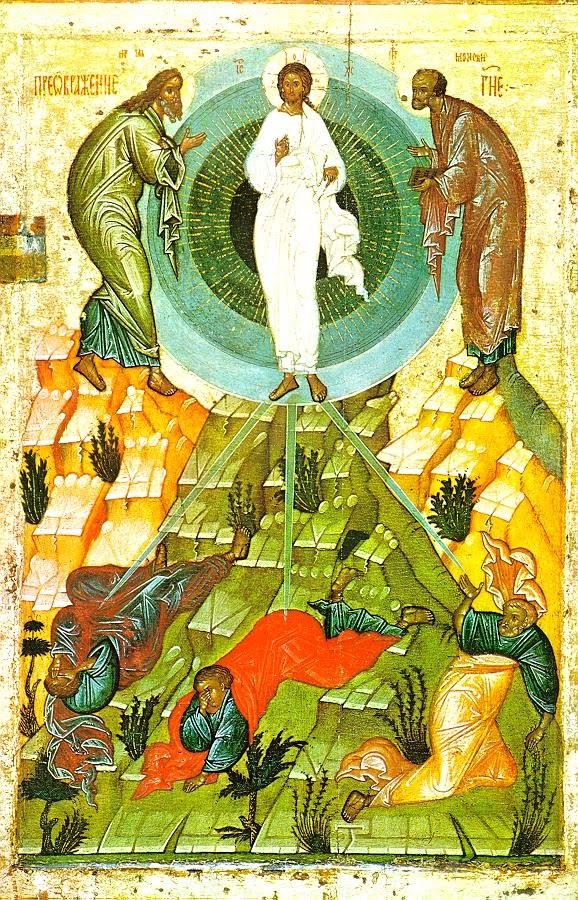
August 6/19 – Holy Transfiguration of Our Lord God and Savior Jesus Christ
12:00 PM
In the Transfiguration of the Lord the mystical nature of the One, Who in those days was called a Nazarene or a Prophet, instantly became manifest to the three disciples whom He chose Himself, or, in the church language, this Nature manifested Itself through the human flesh of Jesus. Apostles Peter, James, and John saw the Son, Whose countenance shone “like the son”, “His garments became shining, very white, like the snow, white like no person on earth could make them.” At the same time the Apostles felt upon themselves tangible “grace of the Holy Spirit, coming like a noetic light, bringing joy” (from the words of St. Symeon the New Theologian). When, for a time, penetrated by this light Peter cried out: “Lord! It is good for us to be here”, the voice of the Heavenly Father, that said: “This is My beloved Son, in Whom I am well pleased; listen unto Him” (Matthew 17:4) became intelligible to him, to James and to John.
The author of the third Gospel, holy apostle Luke, in his description of the Transfiguration, lists three most important details: the appearance of the Lord’s “countenance” changed during prayer; Prophets Moses and Elias talked with Jesus “about His passing, which He had to accomplish in Jerusalem” (Luke 9:31); the disciples themselves were “heavy with sleep” and that , in a way, foreshadowed the overwhelming black sleepiness that was soon to come upon the apostles in the garden of Gethsemane.
“The Prophets and Apostles were filled with joy, – says St. Ephraim the Syrian. – The Prophets rejoiced, because they saw here His humanity that they didn’t see before, the Apostles rejoiced, because they saw here the glory of His Divinity that they didn’t know before.”
The church tradition, going back at least to the third century of christian era, states that Transfiguration took place upon mount Tabor, in the southern part of Galilee.
“Mount Tabor, heaven on earth, exultation of the soul and the nourishment of the eyes of the orthodox: because some divine grace is present, overshadowing the mountain, and that inspires spiritual joy”, – wrote a greek from Crete, the author of the pilgrim’s notes John Phocas, whose visit to the Holy Places of Palestine took place in the year 1187. Yet, it is difficult to say what exactly did he see upon mount Tabor: some sources say that already in 1181 the armies of calif Saladdin destroyed the local monasteries and churches, killing the monks, and built a fortress on the ruins in order to ward off the attacks of the crusaders.
“In the year 1217, crowds of the crusaders, made up of pilgrims, gathered under the direction of the kings: Andrew of Hungary, Hugo of Cypress, and John of Jerusalem, on the day of St. Andrew camped at the foot of Mount Tabor against the fortress situated at the top” – says professor of divinity Benjamin Ioannidis, author of a recent and famous description of the Holy Land. – The Saracen garrison, as soon as the approaching army of the crusaders was spotted, set out against them at the gates of the fortress… Many of the cavaliers of the Orders of St. John and of the Temple died without any success…”.
A century earlier, the glorified “Igumen of the Russian Land” Daniel mentions the churches on Tabor in his “Pilgrimage”: “There is a high place at the very top of that mountain, as if a rock, small and sharp at the top, that is the place where Christ our God was transfigured; there is a good church in honor of Transfiguration there, and another one in honor of the holy prophets Moses and Elias.”.
Later on, all of this disappeared at the efforts of the destroyers, and only in the 19th century, greek Orthodox church was built on Tabor, where one can see the remains of the buildings from the times of St. Helena, mother of holy equal-to-the-apostles Emperor Constantine. The guide for the Russian pilgrims, published in 1894, says: “Pilgrims spend almost an hour in order to climb the mountain of Transfiguration. At the wall of the greek monastery the caravan is met by bell ringing and the pilgrims go straight into the church… Having worshipped at the holy place, they settle within the walls of the monastery in any way they can. The entire building of the monastery, even the church, is wide open to receive the travelers from afar. In the evening, our Russian hieromonks, along with all the brethren of Tabor, clergy from the pilgrims and in the presence of the Metropolitan (of Nazareth) serve the all-night vigil, and later on, closer to sunrise, Liturgy in church slavonic.”
The shining of the light of Tabor – uncreated light – right next to the sleeping sinful people contains within itself a promise: “It is impossible for Him not to enlighten those, who in a worthy manner participate in the Divine radiance of His Body within us”, – writes St. Gregory Palamas. It was specifically in this manner that St. Seraphim of Sarov vouchsafed his friend and disciple N.A. Motovilov to become a fellow seer and fellow participant in being in the Light of the Transfiguration. “Imagine, in the middle of the sun, in the very brilliant radiance of its noon rays, the face of the man, who is speaking with you. You see the movement of his lips, the changing expression of his eyes, hear his voice, but see neither yourself, nor his figure, save for solely the blinding light, spreading far, and illuminating with its bright shining the snow, which covers the meadow, along with the snow flakes, covering from above both me and the Great Elder”, – related Motovilov about what took place.
In continuation of the Old Testament tradition, the fruit of the earth – ears of grain and grapes, “for from them comes the wine for the bloodless sacrifice”, are blessed on the feast of Transfiguration. Usually, in Russia apples are blessed. The Church entreats the Lord, that He grant to those eating the fruits sanctification of the soul together with the sanctification of the body, that He would keep their life in peace and joy, and that He multiply the fruits. The Church of Christ blesses and sanctifies the offered fruits with the holy Name of God, glorified in the Trinity.
-

About the One Thing Needful
09:45 PM
There appeared on the internet a reply to the Synod of Bishops’ open letter addressed to the suspended clergy of the South American Diocese of the Church Abroad (http://russianorthodoxchurch.ws/synod/2010/sadioceseletter.html). The author of this reply is the defrocked bishop Agathangel Pashkovskiy, who calls himself “metropolitan” (http://sinod.ruschurchabroad.org/100804.htm).
Neither the letter of the Synod, nor the preceding appeal to the Synod from the South American clergy were addressed to the former bishop Agathangel.
However, we decided to reply to his commentaries since our letters are addressed not only to Latin America, but are intended for all, who came to be outside of the Church’s fold.
First of all, we assure former bishop Agathangel that, despite his feelings, the letter of the Synod of Bishops, to which he responded, was not written in Russia. Its collective authors were exclusively native members of the ROCOR, who were never in another jurisdiction, not even for a day. These individuals can in no way be numbered among the “contemporary Russians” because most of them were born outside the borders of our Historic Fatherland. It also is not clear where in the letter of the Synod of Bishop did the former bishop Agathangel find the call to “return to Russian Federation”, as well as the statements “as though in Russia all is well”.
Persistent accusations in “slanting”, “falsehood” and other rest wholly on the conscience of the former bishop Agathangel. His ambition is to claim the South American diocese of the Russian Church Abroad. Yet, upon what grounds? In reality, as any interested reader may easily find out, the case is as follows: according to Part IV, paragraph 37, point “n” of the current Regulations of ROCOR, “in case of a vacant episcopal see, to take upon himself temporary control of it or to assign a bishop before the appointment of a Ruling Bishop”. That is exactly what happened after the repose of His Grace, Bishop Alexander of South America. And it was exactly the same situation that came to be after the self-initiated creation and heading of the so-called “PSEA” by the former bishop Agathangel, which meant nothing other than his refusal to obey the Synod of Bishops that issued the decree about the appointment of former bishop Agathangel to the South American cathedra. Consequently, former bishop Agathangel could then in no way claim the administration of the South American Diocese of ROCOR and that was clearly understood by the clergy of that diocese. That is the reason why some of them have petitioned Vladyka Metropolitan Laurus, as their ruling hierarch, with the request for a “canonical release”, that being the subject of discussion in their letter. We are left only to quote the words of the former bishop Agathangel, applying what he wrote to his own case: “That is known by every native member of ROCOR, the author also knows it, but he writes a lie in order to confuse the readers”.
Speaking of ecumenism, former bishop Agathangel sites history and tradition instead of the Holy Canons quite intentionally. Both (history and tradition) unlike the Holy Canons, proceed “from man and according to man” and that is why they are always confirmed by the catholic (soborny) divinely inspired mind of the Church. For example, until a particular time the Church accepted considerably more New Testament scriptures than it does now. However, can we say that our Four Gospels are the breaking of the “historic traditions”, “traditions of the elders”? The well-known statement of our Council of Bishops of the Church Abroad of the year 1983, when the teaching of ecumenism was anathematised is only the opinion, the position pronounced by the part of the Local Russian Church. By the way, that was said by the ever-memorable Metropolitan Vitaly, whose views on ecumenism are well known to all. At the same time in the Local Russian Church, both in the Fatherland and abroad, joint services together with the heterodox were never permitted and the idea of the “plurality of the truth” was never preached. The external position of the Church Abroad remains immovable: thus, in the year 2008, His Eminence, the Very Most Reverend Metropolitan Hilarion, in his presentation in Moscow, once again called upon the Russian Orthodox Church to leave the World Council of Churches. His appeal, originating within our entire Russian Church Abroad, finds ever greater numbers of supporters among the hierarchs in the homeland.
The former bishop Agathangel calls “sergianism” a sin. Yet, he forgets, that the sin, expressed in the unworthy and in the end useless attempts of the Church authorities to find a common language with the earthly powers hostile to Christianity, is not foreign to himself. When he was a hierarch, Agathangel Pashkovskiy always exhibited an excessive inclination to participate in political campaigns. During the presidential election in 2004 in the Ukraine he held very close ties with one of the candidates, in reality taking part in the so-called “orange revolution”. The name of the former bishop Agathangel is associated with one of the most criticised city mayors and that was in no way beneficial for the Church. Now, of course, he is free to do as he minds. In any case, however, the fate of the hierarchy of the Russian Orthodox Church in the Fatherland, who, according to the words of St. John of Shanghai and San Francisco, had to keep Orthodoxy on the surface of the Russian life by suffering on the cross, is in no way diminished to such accusations.
Speaking of the “unlawful seizure of churches in Suzdal”, the former bishop Agathangel for some reason fails to mention from whom these churches were seized. We are speaking of the self-styled schismatic group “ROAC” of the twice defrocked Valentine Rousantsev. The transfer of these Suzdal churches to the Orthodox Church is at least as lawful as the transfer of the seized Church properties in other Russian cities, where churches were made into warehouses, clubs, museums and prisons.
The given example confirms the very fact that there are no more persecutions of the Church in today’s Russia.
Carried away by political insinuations, former bishop Agathangel stubbornly refuses to talk about the main content of the letter of the Synod of Bishops: about the division of the Church.
We did not say a word about secular affairs. We only said that the clergy, who left the fold of the Church, who made up a self-styled gathering, lost the right and the ability to perform the Mysteries. Those, who dare to serve despite being suspended, in accordance with the Holy Canons, defrock themselves. It means that both they, and the ones who approach them as pastors, are deprived of the grace-filled Mysteries, which are the only way to salvation.
It is of nothing else, but only of this, the one thing needful, we whole-heartedly whish that they would think while it is not too late.
GABRIEL,
Bishop of Montreal & Canada
Permanent member of the Synod of Bishops -
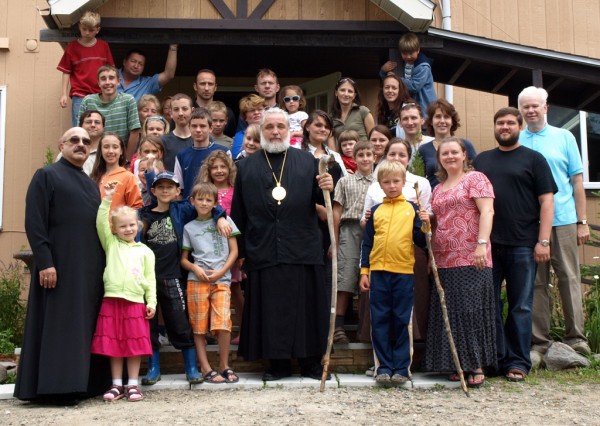
Ss. Boris & Gleb’s children’s summer camp of the A.S. Pushkin’s parish school completed this season
09:32 AM
On August 8 the annual Ss. Boris & Gleb’s children’s summer camp of the A.S. Pushkin’s parish school (www.pushkinschool.org) at St. Nicholas cathedral in Montreal, Quebec, completed this season.
This year the camp was organized in a beautiful valley north of Montreal in the area of Val-Des-Lacs.
A spacious two story cottage, with many comfortable rooms, a large dining room, well-equipped kitchen, and roomy hall, is situated there next to a mountain brook, surrounded by park forests. Next to the cottage is a fenced in swimming pool.
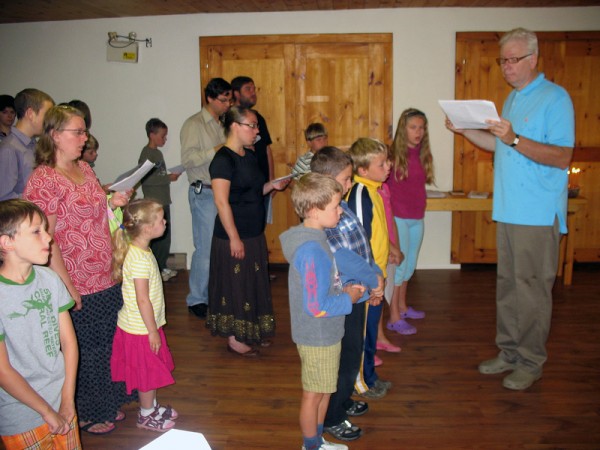
Aside from the various excursions, fishing, and of course, playing in the open air in grass covered fields, the children – during the lessons in the Law of God – prepared for the traditional divine service at the end of the summer rest.
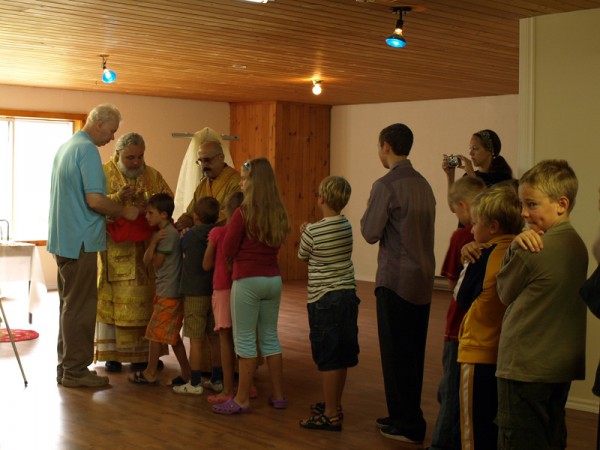
On Sunday morning, in the hall decorated with flowers, His Grace, Gabriel, Bishop of Montreal & Canada, served the Divine Liturgy. The children’s choir, conducted by subdeacon Grigoriy Vasilievitch Borovik, sang melodiously and beautifully. Of almost forty people present – young and old – majority confessed and received Holy Communion.
After the dismissal of the Liturgy, everyone was invited to the festive meal. The main dish, for the majority, was the freshly cooked fish that the young fishermen caught at the dawn of the same day.
-
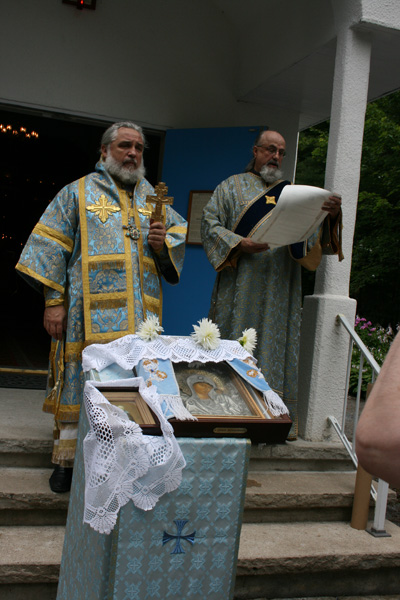
PARISH FEAST OF THE KAZAN CHURCH IN ROWDON (QUEBEC)
11:43 AM
Last Sunday the parishioners of the church dedicated to the “Kazan” icon of the Mother of God (Rowdon, Quebec) once again gathered for the festivities in honour of the approaching parish feast.
Kazan icon of the Mother of God is one of the most venerated icons of the Most Holy Theotokos in Russia. The wondrous appearance of this icon to the citizens of Kazan took place on July 8 (July 21 new style) 1579, a quarter of a century after the conquest of the Kazan khanate by Ivan the Terrible (1552) and the soon after establishment of the archbishop’s cathedra in Kazan (1555). For the Russian Orthodox Christians this icon still embodies the idea of the prayerful protection and intercession of the Most Holy Theotokos for our Fatherland.
The parish feast celebration that gathers many visitors in Rowdon, one of the most beautiful places in Quebec, is already a tradition for the Canadian diocese. It was begun in 1982, after the building of the current church in place of the original wooden one, that was damaged by fire.
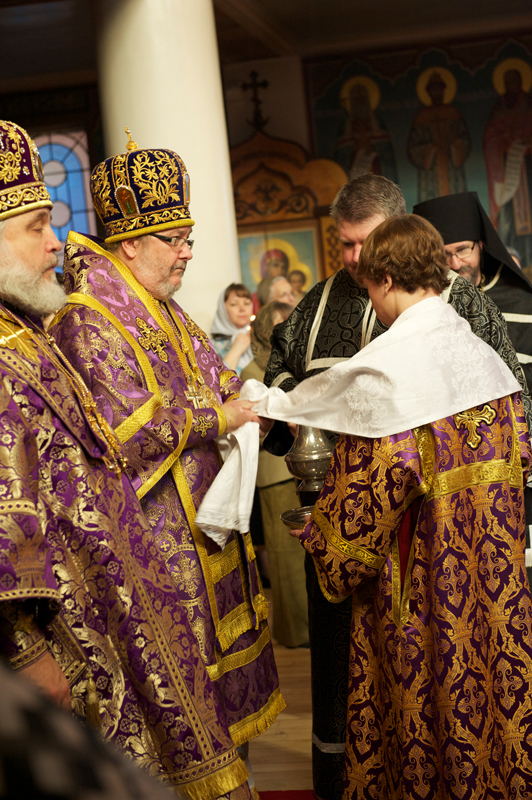
His Grace, Gabriel, Bishop of Montreal and Canada, along with Protopriest George Lagodich (sacristan of the St. Nicholas’ cathedral), protodeacon Vasili Milonow (Protection memorial church, Ottawa, Ontario), and deacon Boris Sidorenko (St. Nicholas’ cathedral) served the Divine Liturgy attended by many of the faithful. The choir sounded beautifully and evenly, directed this time by subdeacon Peter Pavlovich Paganuzzi.
The Consul General of the Russian Federation in Montreal, Alexei Victorovich Isakov with wife Ludmila Vasilievna, was present at the service among the faithful.
After the dismissal there was a cross procession. Before it, standing in the doors of the church, His Grace, Bishop Gabriel read and then bestowed Diocesan gramotas to two oldest Rowdon parishioners: Olga Matfeevna Zhihareva and Ekaterina Afanasievna Potemkina, both of whom worked a lot for the good of the church.
Then, having prayed, everyone enjoyed the traditional festive meal, wonderfully prepared, as usual, by the local sisterhood headed by Tatiana Konstantinovna Nesterova-Boye.
In his address during the meal, His Grace congratulated all the parishioners with the coming parish feast, thanking them for their fervour and participation in the life of the Church. Vladyka also thanked the Rowdon sisters for the meal.
The Consul General of Russian Federation also greeted everyone. He expressed his joy that he was able for the first time see the beauty of this place and thanked the organizers for the zealous preservation of the true Russian Orthodox spirit of such feasts that unite all Russian people, who came to live in Canada in different times.
We offer you a number of photos from the event.
-
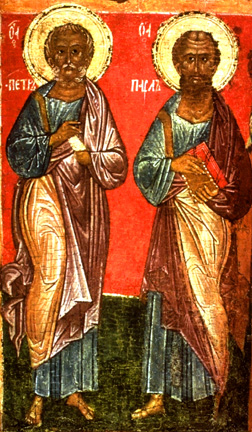
Homily on the day of the Preeminent Apostles Peter & Paul – St. John of Kronstadt
10:33 PM
We magnify you, o holy preeminent apostles Peter and Paul,
who have enlightened the whole world with your teachings
and brought all the ends of it to ChristThe Lord worthily exalted the names of the holy Apostles throughout the universe: for they were the disciples and fellow labourers with Christ God, the ones who enlightened the entire world with their teachings, the world that was in darkness and in the shadow of death, they brought countless souls from the worship of idols to the knowledge of true God and from dishonour to righteous life, they lived on earth in a heavenly manner, like bodiless angels, having disdained all earthly things as corruptible and temporary, vain and sinful; they worked innumerable miracles, undertook unbelievably great labours, and finally gave their souls for the faith in their Lord. These, in general terms, are the merits of the holy Apostles, and especially of the holy Apostles Peter and Paul.
Unto us, the unworthy ministers, the Lord has bestowed the calling and the ministry of the apostles; therefore our work, even as theirs was, is to teach and enlighten the people, committed to our direction, that they may live in a manner worthy of the Christian calling, that they may work out their salvation with fear and trembling, that they may correct their hearts and characters, that they shy away from the passions that war against the soul, that they live piously, honourably and in a holy manner, waiting for the Lord to come from the heavens to judge the whole world. All the people in the world chase after gain, some out of need, others out of habit, on account of passion; our work is not to chase after gain, not to collect perishing riches; our work, our gain is the salvation of human souls, redeemed by the blood of the Son of God, and our own salvation. And woe, woe unto us, if we chase after gain as did Judas the Iscariot. Then we will destroy both ourselves and the souls committed to our care by God: for how can the priest, will he want to save souls if his heart is occupied by gain? He knows only the value of money; he doesn’t know, with his heart he doesn’t know, he doesn’t feel how precious is the salvation of the soul; salvation for him is an empty word. The one that doesn’t care for his own salvation, will he care for the salvation of others? No, he will not. That is why the apostles of Christ considered all earthly things to be dust, while the salvation of souls they considered to be their main task. Oh, how they loved people, and how they loved people’s souls redeemed from the eternal curse by such a great price, by the blood of the Son of God! They loved them with the love of Christ, teaching every person with tears day and night. Read the letters or the epistles of the apostles where they preached the word of God to the residents of the various cities or to specific individuals; you will see what hot, burning, divine love permeated and inflamed their hearts! In truth, what can be more precious than the salvation of the human soul, which is the image and likeness of the immortal God! The entire world is worth less than one soul. For what is a man profited, if he shall gain the whole world, and lose his own soul? or what shall a man give in exchange for his soul? (Matthew 16:26
Thus, my brethren, most of all take care for the salvation of your souls that are perishing in their sins. The time of the earthly life is short, while eternity has no end; at the same time the end of our life is unknown. Make haste to entreat God with repentance, contrition of heart, and correction of life. You, o holy preeminent Apostles Peter and Paul, do we entreat, pray for us to our God, that the Lord direct our hearts and thoughts toward salvation, that He may soften and confirm, that He may have mercy and save all of us. Amen.
-
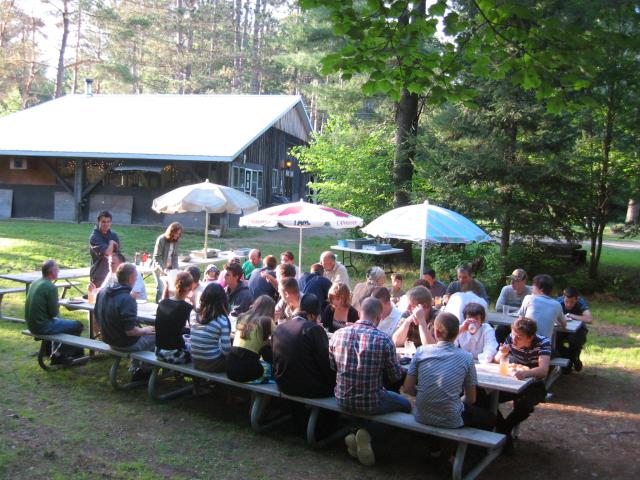
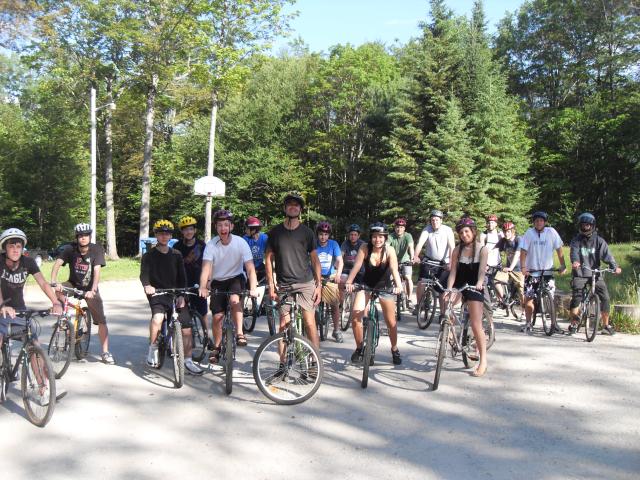
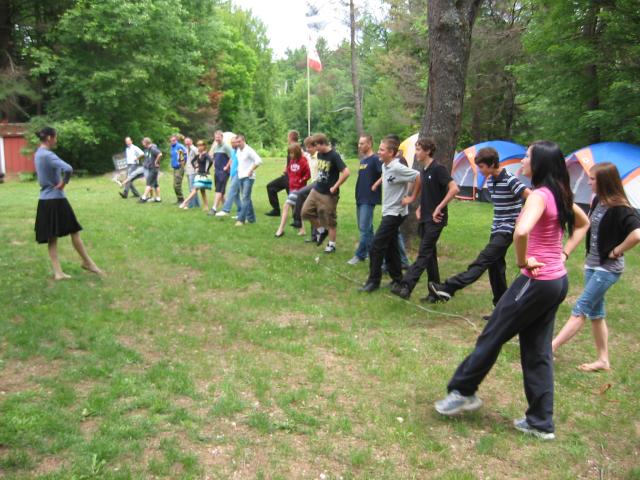
Ruskoka camp hosted 2010 Leadership Workshop
01:18 PM
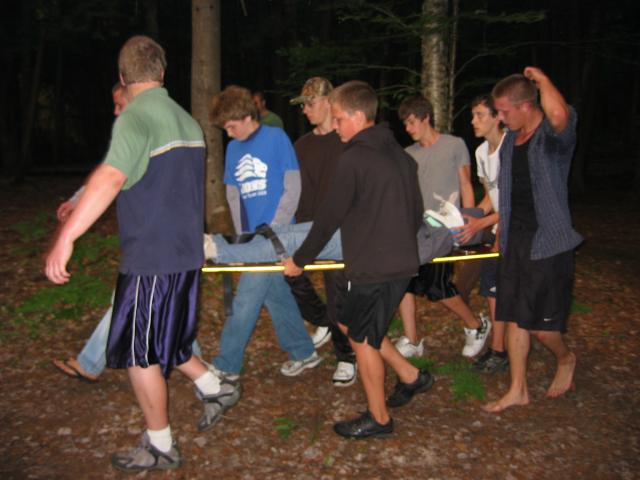
The annual Leadership Workshop was held in the diocesan camp Ruskoka from June 18th, through the 21st. Over 20 counselors and 16 volunteers gathered in the beautiful area in Muskoka. As usual, the workshop was organized and attended by staff and counselors from two orthodox camps: Ruskoka (Canadian Diocese) and ORPR (Chicago Diocese).
The participants were offered a diverse program: sports, swimming, Russian folk dances, spiritual discussion, and also a question and answer session with the priest. All-night vigil was served on Saturday and Divine Liturgy on Sunday morning. The choir was directed by Olga Feodorovna Pechnikova, while the services, discussion and question and answer session were conducted by priest Viatcheslav Davidenko.
Alik Sakuta, director of the Ruskoka camp expressed his heartfelt gratitude to all the participants and volunteers for their labours.
-
Pictures from the pilgrimage to the Holy Land
11:04 PM
The photographs from His Grace, Bishop Gabriel’s group’s pilgrimage to the Holy Land have been placed in the Photo Albums section of the site.
-
Dinner for poor and sick children in the Ukraine
08:20 AM
His Grace, Bishop Gabriel visited the Parish of the Memorial Church of the Protection of the Holy Virgin from Friday March 12th to Sunday the 14th. On Friday evening about 95 people attended the service of Holy Unction.
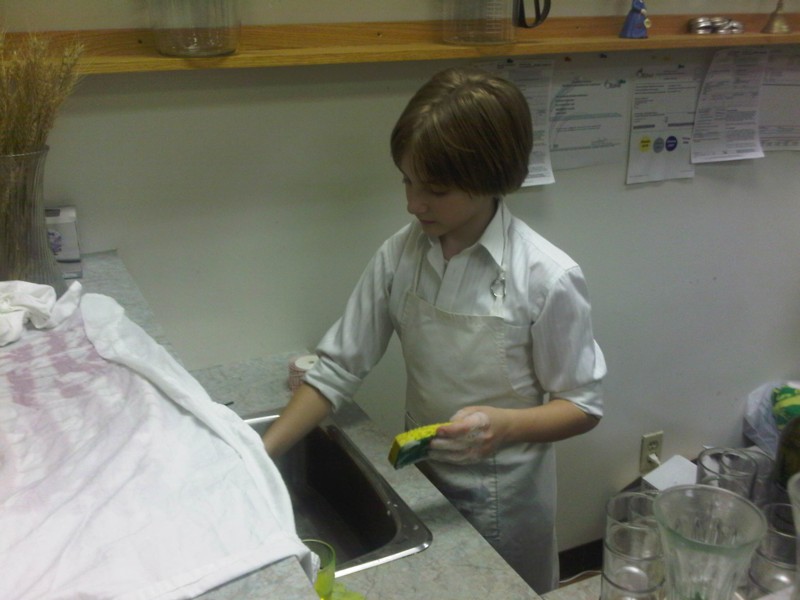
On Sunday, after the Divine Liturgy, the children and youth of the parish hosted their 5th Annual Benefit Dinner for Poor and Underprivileged Children.
This year, children as young as 3 years old prepared a wonderful Lenten chili meal that was enjoyed by all. The total amount collected was $2,100, and will be sent again this year as last to the orphanage under the care of the Ascension Monastery, in Chernovitsa in the Ukraine. We are grateful to Fr. Victor Lochmatov, who came from Jordanville again this year to attend the services and support this worthy cause.
Over the past 5 years, the children have raised over $12,000 in support of those who have less than us.The children would also like to express their thanks and gratitude to his Grace, Bishop Gabriel who is very supportive of their efforts, and everyone who attended and supported them. Guests came from London, Toronto, Jordanville, Montreal and other surrounding cities.
Photos may be viewed on the parish site.
-
His Grace, Bishop Gabriel’s Paschal epistle
08:20 AM
To the clergy and the God-loving flock of the Canadian Diocese of the Russian Orthodox Church Outside of Russia
CHRIST IS RISEN!
Reverend fathers, brothers and sisters beloved in the Lord!
It is the day of resurrection! Let us be illumined, O ye people! Pascha, the Lord’s Pascha! Do these words of the solemn and joyous Festive chants express our inner state today, or do we, even on this Great day of the Glory of the Lord, remain in captivity of the daily cares? We hope that is not the case, may it not be so.
A Christian is not a simple reflection of his outward life, – says the Most Blessed Metropolitan Anthony (Khrapovitsky), the founder and first head of the Russian Church Abroad, – in him there must be and is another, inner life, lit by the memory of Christ, proceeding from the tomb as Victor, Christ, Who said to the myrrh bearing women: rejoice!
It often happens that our earthly life is not very sweet, but it is even more bitter for those, to whom the joyous glorification of Christ is not accessible; for those, who are separated from the Light of the Resurrection of Christ by the unavoidable burdens of their earthly life.
Apostle Paul wrote, addressing the ancient Christians: “Who shall separate us from the love of God, shall tribulation, or distress, or persecution, or famine, or nakedness, or peril, or sword?” (Romans 8:35). Such was the lot of the Christians of the first centuries, and in our times, the lot of the holy New Martyrs of Russia. However, do we have to endure anything similar to that? If on account of our weakness we cannot be like Saint Seraphim of Sarov, who received from the Lord the abiding Paschal joy, so that every day of the year he greeted his visitors with the words: “My joy, Christ is risen!” Yet, beloved brothers and sisters, at least in these days of the Pascha of Christ, let us set aside our daily cares.
Today together we celebrate the “death of death, the destruction of Hades, the beginning of another life eternal”. We, according to the words of Most Blessed Metropolitan Anthony, are called to be the sons of resurrection, and in that is the essence of our hope. Hence, let us also repeat the wondrous words of the Psalmist, ones that are many times today chanted in the Church of Christ: “This is the day that the Lord hath made, let us rejoice and be glad in it” (Psalm 117:24).
Truly Christ is Risen!
Gabriel
Bishop of Montreal and Canada
Pascha of Christ, 2010