News
-
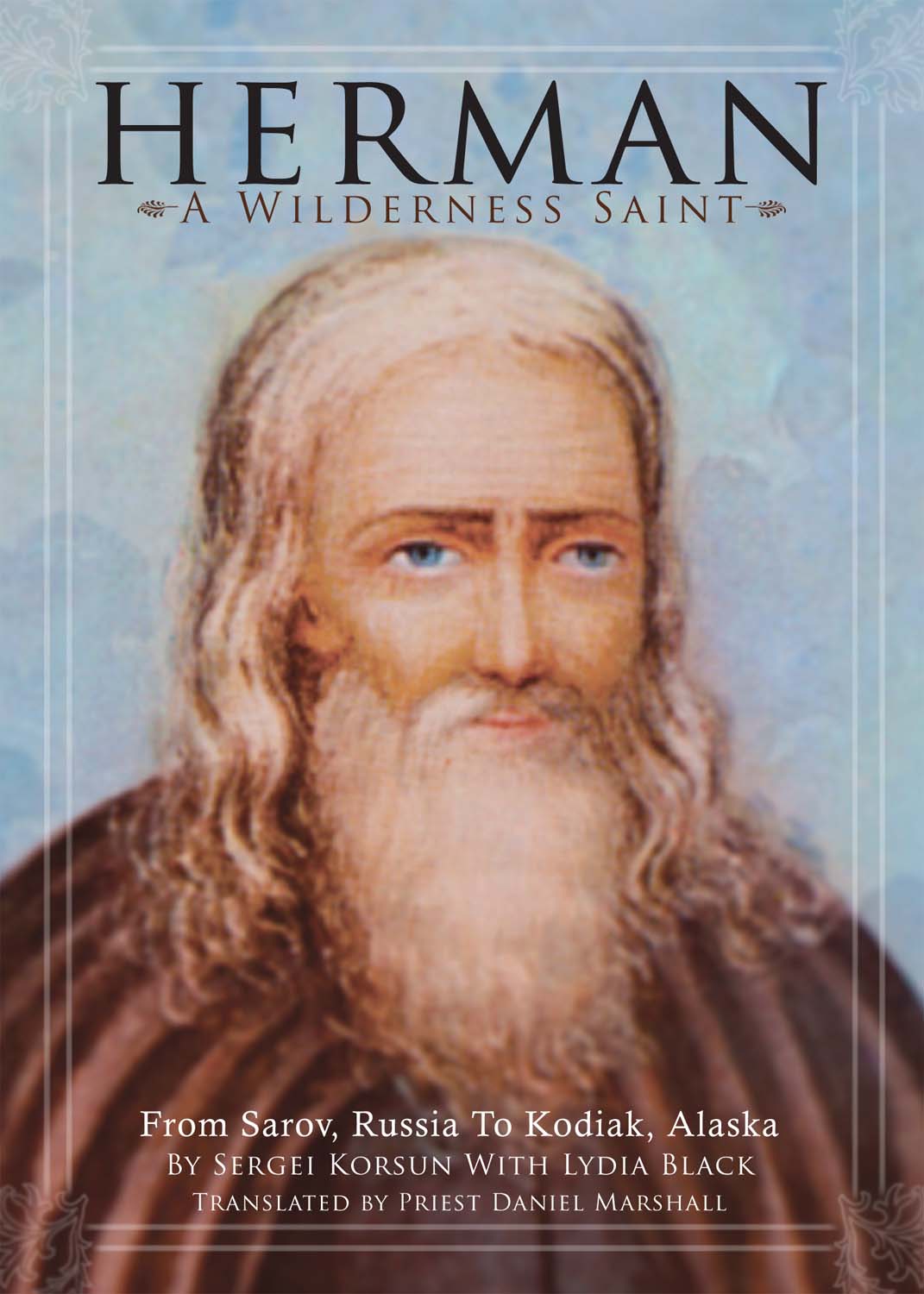
St. Herman Youth Conference of the Eastern American and Canadian Dioceses
05:47 PM
The Eastern American Diocese’s St Herman’s Youth Conference has opened registration for 2013. With the blessing of His Eminence Metropolitan Hilarion of Eastern America and New York and His Eminence Archbishop Gabriel of Montreal and Canada, chairman of the St Herman’s Executive Committee, the conference will be jointly hosted by two New York parishes: St Seraphim Memorial Church in Sea Cliff and Holy Virgin Intercession Church in Glen Cove, on December 22-26, 2013 .
The cost for the conference will be a discounted rate of $275 prior to the Tuesday, December 3 , deadline and includes lodging, meals, and local transportation (not including transport to and from the airport). After December 3 , the price will increase to $300. For further information and registration, please visit the website here . Organizers ask that those interested register early, as a large number of attendees is expected.Similar conferences will be held in the Diocese of Australia and New Zealand, the Western American Diocese and the Diocese of Chicago and Mid-America, to be announced in the near future.
-
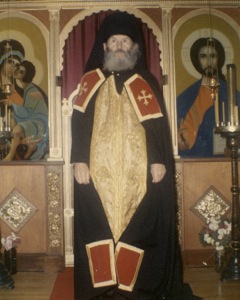
20th anniversary of the repose of Archimandrite Gregory Moiseevsky
04:15 PM
Archimandrite Gregory
On October 21st 2013 we will be marking the 20th anniversary of the repose of Archimandrite Gregory Moiseevsky, a priest of the Canadian Diocese of the Russian Orthodox Church Outside of Russia for over forty years. He served in Winnipeg, Ottawa, Toronto and Edmonton. He was a bright example of humility and simplicity. A teacher of young people, lover of the church services, church slavonic language and church music and a man of prayer as well as a true pastor to many faithful members of our diocese.
Let us not forget St. Paul’s words to “remember them which have the rule over you, who have spoken unto you the word of God” (Hebrews 13: 7), and remember in our prayers the reposed servant of God Archimandrite Gregory. May the Lord grant him the heavenly kingdom and memory eternal.Below is a biography published in Pravoslavnaia Rus’ shortly after his death.
Archimandrite Gregory (Moiseevsky), the former dean of the Russian Orthodox parishes in Alberta and rector of St. Vladimir’s church in Edmonton, passed away on October 8/21, 1993, the day the church celebrates the memory of St. Pelagia. He was 96 years old. His funeral service was conducted on October 10/23 with the participation of parishioners and spiritual children of the reposed. With the blessing of Metropolitan Vitaly, Fr. Gregory’s funeral was performed according to the rite of the burial of a priest. Fr. George Primak and Hieromonks John (Hess) and Bartholomew (Vorobiev) presided at the service.
Father Archimandrite Gregory (George Moiseevsky) was born on the 13th of March 1896 in Kortilisy (Volin’, Ukraine), to pious parents Basil and Matrona Moiseevsky. George Moiseevsky had four brothers and two sisters, from whom he was separated after the Russian Revolution. He spent the last ten years of his life earnestly searching for them, but to no avail. Not long after the birth of George the Moiseevsky family moved to Vladimirovo, where the young boy attended church services and began his schooling. His love for God and desire to serve the Holy Church was evident from his youth and was noticed by the local clergy. Already at the age of eight George was given the responsibility of ringing the church bell. After finishing school George began working as a mailman for the railroad.As a result of the Russian Revolution and the following civil war, George, like millions of other Russian refuges, found himself outside of his fatherland. In 1924 the future monk found himself on Cuba in the Caribbean, working on the land. In 1931 George was able to move to France, where after completing electrician’s courses, he began to work in that field. All his free time George gave to the Church. At the beginning of 1946, after seventeen years in France, George moved to England, where Archimandrite Vitaly (the future First-Hierarch of the Russian Church Outside of Russia) and his small monastic brotherhood were stationed.
George entered the brotherhood as a novice and was later tonsured a monk. Soon after his tonsure he was ordained to the diaconate and finally – the priesthood. In 1951-52 the Synod of Bishops transferred the newly-ordained Bishop Vitaly and his monastic brotherhood to Brazil where they continued their mission of gathering the Russian community around the Church and printing and disseminating spiritual literature.
The Synod of Bishops assigned Bishop Vitaly as the ruling bishop of western Canada in 1954. As a result, the brotherhood moved once again. In 1957 Fr. Gregory was assigned as the rector of the Church of the Resurrection in Winnipeg, Manitoba, where he served for almost 12 years. In 1968 he was raised to the rank of archimandrite. Between 1969 and 1970 Archimandrite Gregory was the rector of the Protection of the Mother of God Parish in Ottawa. In 1970 he was assigned as the rector of the Resurrection parish in Toronto, where he stayed until 1972, when he was transferred to Edmonton to serve in St. Vladimir’s church. Later on he was also given responsibilities as the dean of all of the parishes in Alberta.In his work, Fr. Gregory dedicated himself completely to God and the Church. He filled in for sick and absent priests, visited the faithful in the far corners of Alberta and British Columbia, never left a dying person without communing them with the Holy Mysteries. Along with celebrating the regular divine services, which he tried to do as often as possible, Fr. Gregory spent much of his time praying, often late into the night. In the beginning of the 1980’s Fr. Gregory’s eyesight began to fail. To make it possible for him to continue serving the Divine Liturgy a special service book with a large type face was published by the brotherhood of St. Job of Pochaev in Montreal. Unfortunately, Fr. Gregory’s eyesight continued to fail and by 1987 he was no longer able to preform the church services. Due to his failing health Fr. Gregory spent the last four years of his life in a nursing home
After the funeral service, the reposed was taken to the Dormition Convent near Bluffton, Alberta where he was buried in the monastery cemetery. Many of Fr. Gregory’s parishioners will remember their pastor. May the Lord give rest to the soul of the reposed.
Priest George Primak
From Pravoslavnaia Rus’, 1994, No. 6. p. 13 -
Celebration of 400 years of Romanov Dynasty, Toronto, Ontario
12:09 PM
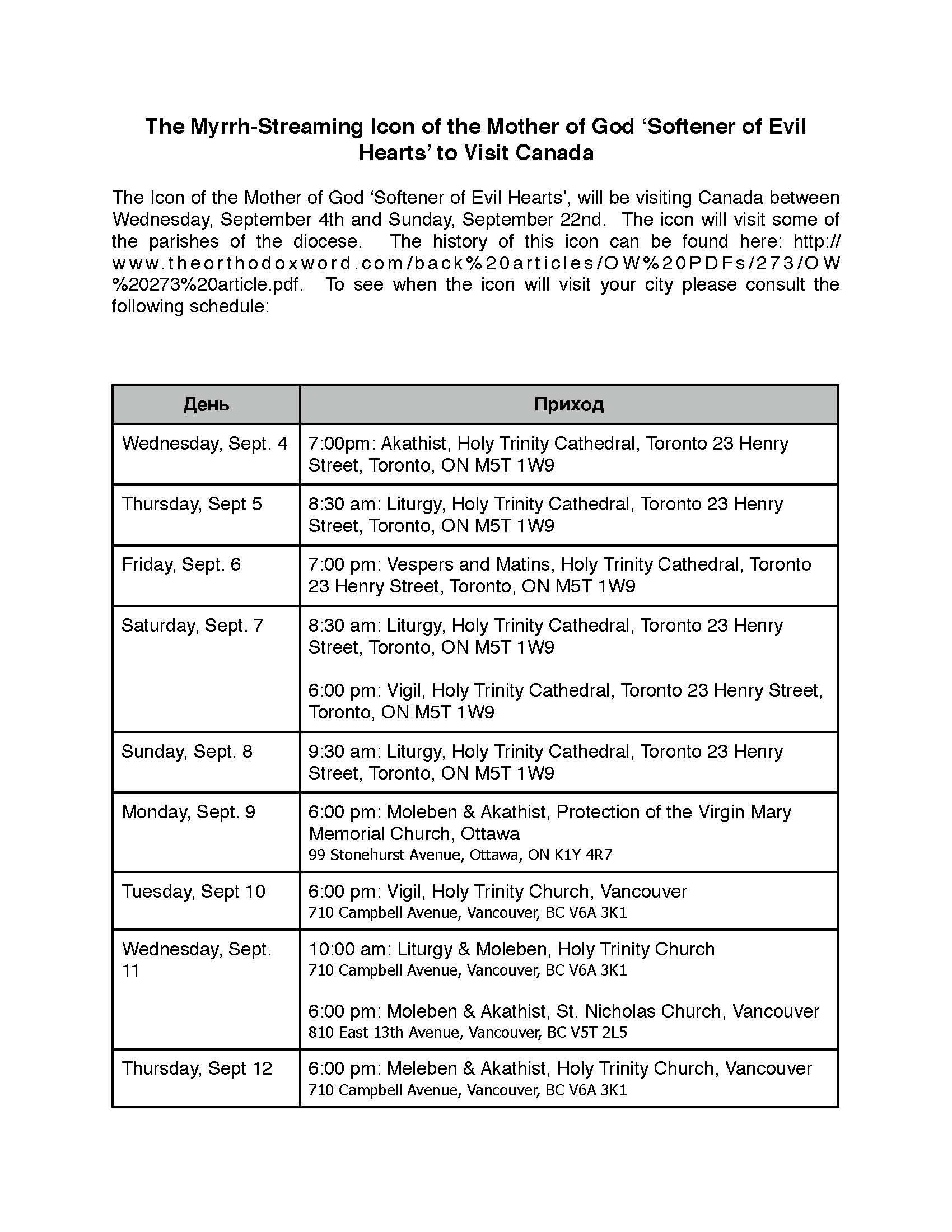
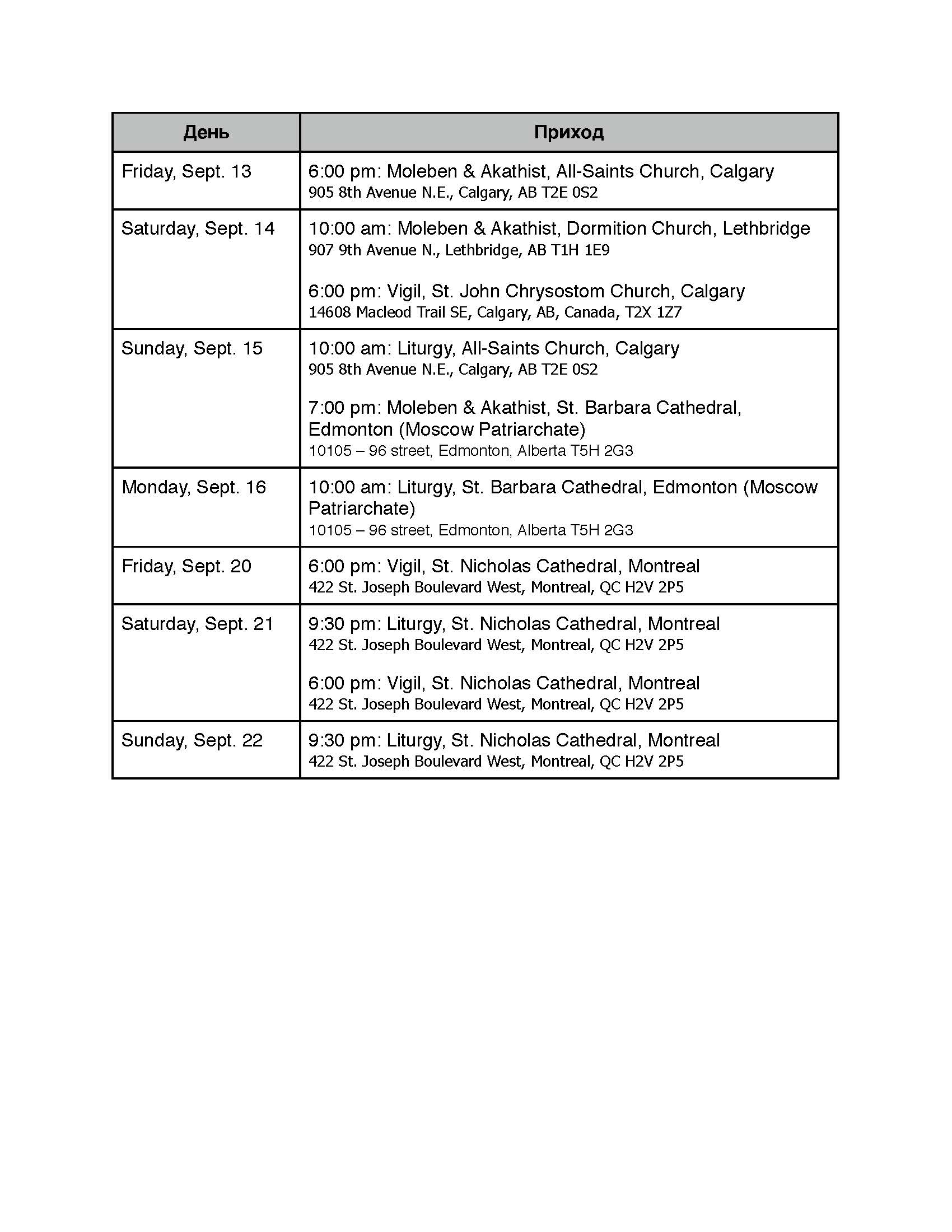
From September 4-8, 2013, at Holy Trinity Cathedral in Toronto, Canada, ceremonies were held dedicated to the 400th anniversary of the House of Romanovs. By decision of the Synod of Bishops of the Russian Orthodox Church Outside of Russia, the center of the celebrations was the Canadian Diocese, and the Toronto church specifically, which boasts the largest parish in the entire Russian diaspora. The celebrations began with the arrival of two miracle-working icons of the Mother of God: the Kursk-Root Icon “of the Sign” and “Softener of Hardened Hearts,” also called “of the Seven-Arrows.” The visit began with a moleben and akathist in the cathedral, headed by His Eminence Metropolitan Hilarion of Eastern America and New York, First Hierarch of the Russian Orthodox Church Outside of Russia.
September 5 was the first day of a working session of the Synod of Bishops, also held in Toronto, and Mitred Protopriest Vladimir Malchenko, Senior Priest of the cathedral, and Protopriest Michael Luboschinksky, Rector of Veil of the Holy Mother Church in Hamilton, Ontario, celebrated Divine Liturgy.
On Friday, September 6, the members of the Synod of Bishops visited the youth summer camp “Ruskoka,” located in a picturesque region of Ontario, on the Muskoka River. The organization’s director, Mr Alexander Viktorovich Sakuta, and volunteer counselors, who had all spent many years working at the camp, ceremoniously and lovingly received the miracle-working images of the Mother of God. The archpastors took a tour of the campgrounds, after which they performed a moleben at Holy Martyr Tsarevich Alexey Chapel, built in the traditional Russian wooden style.
Saturday, September 7, also began with Divine Liturgy at Holy Trinity Cathedral by the local clergymen. Then, all the churchgoers were offered brunch at the parish hall, where the great number of those gathered heard lectures by Mr VV Chukanov on Tsar Alexey Mikhailovich and Mr Yuri Miloslavsky on Emperor Paul I. Ms ON Kulikovskaya then talked about the work her organization, the Grand Duchess Olga Alexandrovna Foundation, does. The duchess was the sister of Tsar-Martyr Nicholas II.
That Saturday evening, Holy Trinity Cathedral, where there are usually 300-400 worshipers for Saturday night vigil, was filled beyond capacity. Metropolitan Hilarion led the service, joined by His Eminence Archbishop Kyrill of San Francisco and Western America, His Eminence Archbishop Gabriel of Montreal and Canada (who originated the idea of holding a celebration for the Romanov Dynasty in his diocese), His Eminence Archbishop Michael of Geneva and Western Europe, His Grace Bishop Peter of Cleveland and His Grace Bishop George of Mayfield.
The crowning moment of the event was Sunday’s Divine Liturgy headed by Metropolitan Hilarion along with the other archpastors, as well as other honored guests: His Grace Bishop Iov of Kashira, Head of the Patriarchal Parishes in Canada, and His Grace Bishop Irenee of Quebec of the Orthodox Church in America. Mr George Skok led the cathedral choir, which sang beautifully and ceremoniously at all services.
The final “act” in the celebration of the 400th anniversary of the Romanov Dynasty was a banquet, at which Metropolitan Hilarion addressed the audience, as did Archbishop Gabriel, Archbishop Kyrill, Bishop Peter, Bishop Iov, Bishop Irenee, Fr Vladimir, Mr SV Chernenko, Associate Consul of the Russian Federation in Toronto, Ms Magdalena Zinyak, Vice President of Omni Video, and others.
A concert was also given, divided into two parts: a performance by the “Troitskiye Solovushki” children’s choir under Ms MV Bakhvalova and Mr Skok’s cathedral choir. Both executed inspired performances which moved their audience. Vladyka Gabriel drew attention to the fact that George Skok, renowned throughout the Church Aborad, has been a choir director for forty years. Georgy Anatolievich was given a gramata of blessing signed by the members of the Synod of Bishops, which the eminent choir director received with tears of gratitude.
Below are photographs of the celebrations:
-

-
Interview with His Eminence Archbishop Gabriel of Montreal and Canada on the 400th Anniversary of the Romanov Dynasty.
06:51 AM
In accordance with a decree by the Synod of Bishops of the Russian Orthodox Church Outside of Russia, Toronto, Canada, will host celebrations of the 400th anniversary of the ascent to the Russian throne of the Romanov Dynasty on September 4-8, 2013. Initiator of this event was His Eminence Archbishop Gabriel of Montreal and Canada, so the main celebrations of one of the key moments in Russian history will take place in Canadian Russia.
– Vladyka, why was this part of the Canadian Diocese chosen for this honor, and Holy Trinity Church in Toronto in particular?
– The request was submitted by the parish itself through its rector, Mitred Protopriest Vladimir Malchenko, Dean of Eastern Canada. Holy Trinity Parish in Toronto, by God’s mercy, today has the most parishioners of any church in the Church Abroad. It has a real Muscovite scale, like churches in the Fatherland: on a Sunday Liturgy there can be up to 500 worshipers, and more on holidays. The church’s decor and frescoes cannot be praised highly enough, and a general renovation project was recently completed. The “Henry Street parish,” as it is often called, has a long and glorious history. Today the heart of the parish consists of those who have come to Canada recently, from all points of our Fatherland, and there is a genuine interest of these members of the flock in the fate of Russia, which I would even say is providential.
I would add that Toronto is where Her Imperial Highness Grand Duchess Olga Alexandrovna Romanova was laid to rest, the sister of our last Tsar. We hope to perform a pannikhida at her grave. All this was taken into consideration, and in the end of 2012, I submitted this appeal from Toronto for consideration by the Synod of Bishops. The request was granted. The parish established a special committee, which began to organize the celebrations: it began in early spring, and the events will take place in September. So far, thank God, everything is going smoothly. I note, by the way, that there will also be a meeting of the Synod of Bishops in Toronto at the time. A detailed list of all planned events has been published.
– The 300th anniversary of the House of Romanovs (which was the last great nation-wide event before Russia’s Second Time of Troubles) was widely celebrated. But the 400th anniversary of this dynasty, after almost a century since the collapse of the Russian Monarchy—why is this so important for us?
– We cannot forget who we are, either in the Fatherland or abroad. Incidentally, while the memory of Holy Orthodox Rus, the Russian Tsars, Anointed of God, the divinely-appointed Monarchy, was literally burned out of the people, the Russian diaspora never forgot the Russian Monarchy. The monarchist ideal, the rejection of which led first to the February Revolution, then to the October Revolution of 1917, did not fade away in the diaspora. Actually, the number of adherents to the monarchy was small at first, because in pre-Revolutionary Russia there were few monarchists in any of the social classes, especially among the educated—or at least those who considered themselves such. Still, by Divine Providence, many, many Russians, having lived abroad for a few years, began to abandon the progressive liberalism and other such errors so common among the intelligentsia. This return to their roots first of all almost always involved a return to the Church, the self-awareness of their Russian Orthodoxy. As far as one could tell from the sentiments of the so-called “second emigration,” something similar was beginning to happen in Russia, too. People began to sense loss, the waste of true moral values. Anyway, even long before the glorification of the Royal Martyrs, July 17, new style, the day of the murder of Righteous Tsar Nicholas II Alexandrovich and His August Family, was designated by our Church Abroad as a day of strict fasting, and pannikhidas were performed everywhere for the murdered Anointed of God. That is how the realization began that the Second Russian Time of Troubles was not the result of unsuccessful, erroneous politics, clever conspiracy by external and internal enemies of the Fatherland, etc, but Divine punishment for general apostasy from Divinely-established Rule. Naturally, there were beastly, fateful mistakes, and conspiracies did unfold. There was “betrayal, cowardice and deceit” everywhere, as we read in the journal of the Holy Royal Passion-bearer Tsar Nikolai Alexandrovich. But that was the crux of the matter, that because of our apostasy from the will of God, we could not escape those mistakes, or correct them, and did not find the strength to resist these conspiracies. We rejected the Anointed of God, and the Lord withdrew from us until we came to our senses. Actually, when the “Restrainer of evil” was taken away from us, the whole world was engulfed by a wave of evil. Today, in the words of His Holiness Patriarch Kirill of Moscow and All Russia, the Lord has replaced wrath with mercy towards Russia, and we must especially remember this and say to ourselves: “Cause me to know, O Lord, the way wherein I should walk.”
– Legally, Russia remains a constitutional monarchy, which could not be canceled either by the Tsar’s abdication nor moreover by the decree by the Kerensky government dated September 10, 1917, in which Russia was declared a republic. What lies ahead for Russia in your opinion, Vladyka?
– We must strive to reestablish the Divinely-established sovereignty in Russia, in all its fullness. You mentioned a constitutional, limited monarchy. This limitation does not come from God, but from man. But even a symbolic, almost ritual monarchy, like in Great Britain, still evokes a sense of respect and good will among people, even those who are alien to the idea of a monarchy. Why is this? Because all creatures sense their Creator, though we may resist and reject this feeling. We must move towards the understanding that the Divinely-established monarchical order is the only one able to resurrect Russia as Holy Rus. Everything else, whether a “liberal” government, or what they called the “Red civilization,” whose evil symbol is still not buried in the past and continues to desecrate the main square of the nation, all this was already tried by us on our own flesh and spirit, and only led us from one time of troubles to another. The constitutional Russia approached the First World War with the best economic indicators, it seemed great and powerful. Today we know what happened only three years later. Soviet Russia neared the last decade of the 20th century as a true superpower. Only one or two years later, the Third Russian Time of Troubles arrived. But by God’s grace, during that period of collapse, the Russian Orthodox Church rose and strengthened, which Her enemies, out of spiritual blindness, deemed was utterly destroyed and lacked any influence. The understanding by the whole people and by each of us individually of the need for a Divinely-established Monarchy for Russia is a complex process, and a sore point. But maybe, as we tire of contemplating the world’s political corruption and cruelty, we can more easily recognize that only a Sovereign Tsar is incorruptible, only he has no need for underhanded political intrigue, has no interest in any lobbies, but by the very essence of his service cannot sacrifice the interests of his nation to her foes. It seems that the time is ripe for such an understanding. Today’s Russian President, whom I have had the honor of meeting, has a true sense of the royal path of state-building, which is leading Russia out of the abyss in which it almost perished “from mutual quarreling out of despair” (the words of Hieromartyr Metropolitan Veniamin of Petrograd). Especially encouraging is how the President strives to find a variation of the Symphony of Church and State, without which the reestablishment of Holy Russia is impossible in principle. These views of the President of Russia found expression in the important historic role he played in the God-pleasing effort of restoring Russian Church unity in 2007. One can only regret that some who call themselves zealots of the Russian Church and patriots of Historic Russia who resisted this unity try to sabotage it, even resorting to slander and other such methods. In the end, all these “zealots” and “patriots” know not what they do, and they are among the most extreme haters of the Russian Church, of the Russian Orthodox people and Russian statehood.By the way, when discussing external politics, let us not forget, too, that for the first 130 years after declaring independence, the United States and Imperial Russia were not only strategic partners, so to speak, but the closest of allies. Catherine the Great’s Russia rejected an offer to intervene in the War of Independence, the Russia of Paul I, “the Knight Tsar,” helped develop and deepen Russian-American economic ties, and the Russia of Alexander II, “the Emancipator,” supported President Lincoln and prevented the United States from collapse. May God grant that we return to this friendly division between two great powers.
As far as the restoration of the Monarchy is concerned, when the Lord allows the prophecies of St Seraphim of Sarov, St John of Kronstadt and other saintly fathers to be fulfilled, then we can hope that a Pomestny Zemsky Sobor [National Council of the Land—transl.] to be convened, as it was in 1613. On this Council, of course, it would be improper and even impossible to insist that it limit itself to any specific dynasty. This Council, which we do not yet dare speak of, will summon—I repeat, summon, not elect—“by the voices of its delegates” the one whom the Lord will entrust the protection of the Russian Land.
– May your words be fulfilled, Vladyka. What awaits those who go to Toronto?
– This will be a Church-wide celebration, for the entire Russian Orthodox Church, both in the Fatherland and abroad. This will be the only such celebration, not just for the Church Abroad, but for all of Russia. My Canadian brother hierarch, the head of the Patriarchal Parishes in Canada, His Grace Bishop Job, will participate. Other representative bishops of the fraternal Churches who serve in Canada are also invited. We expect guests from all over North America, and we hope from Russia. I already mentioned that the Synod of Bishops will be convening. We are in one of the most picturesque regions of “Canadian Russia”—Ruskoka youth camp on the Muskoka River. There is a splendid wooden church there built in the traditional Russian style, dedicated to Tsarevich-Martyr Alexei Nikolaevich. Our celebration will be graced by the presence of miracle-working icons: the Hodigitria [Protectress—transl.] of the Russian diaspora, the Kursk-Root Icon of the Mother of God “of the Sign” and the Icon of the Mother of God “Softener of Hardened Hearts,” from the Fatherland.
I expect that everyone who has the opportunity will want to bear witness to this truly historic event.
-
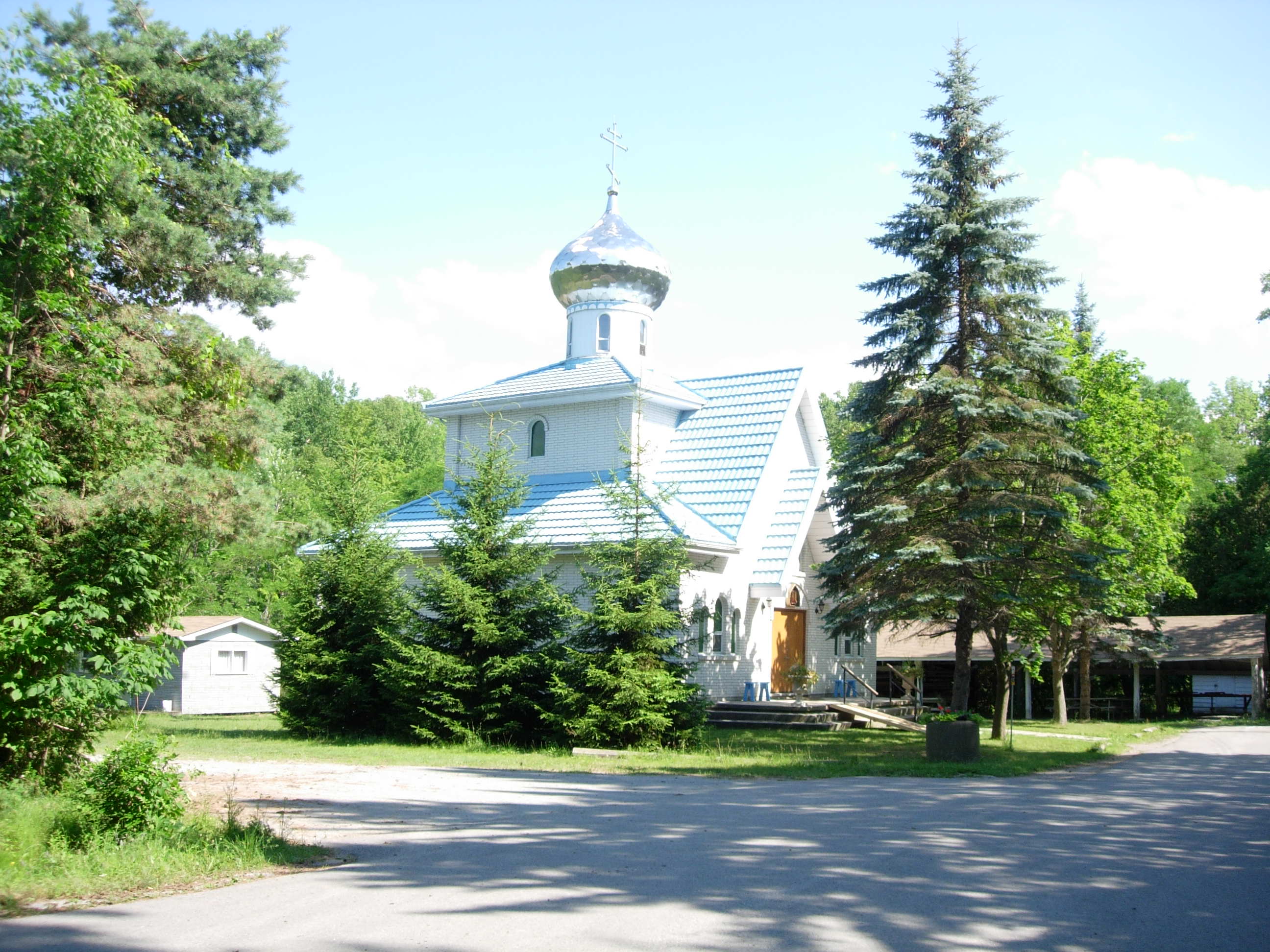
The feast of Our Lady of Smolensk Russian Orthodox Church in Jackson’s Point, Ontario (Berezki)
08:12 PM
On Saturday, August 3, 2013 at the Our Lady of Smolensk Russian Orthodox Church in Jackson’s Point, Ontario (Berezki), the Annual Feast was celebrated. 2013 marks the fifty-sixth year of the parish. The All-Night Vigil and the Divine Liturgy were presided by Archbishop GABRIEL of Montreal & Canada; with Archpriest Michael Orlov, the parish rector; priest Viatcheslav Davidenko from Toronto; Protodeacon Wasili Melonov from Ottawa; Deacon Boris Bakhvalov from Toronto; subdeacons and readers from within the Greater Toronto Area.
On Sunday, during the reading of the sixth hour, after Psalm 90, Reader Walter Gitow, Jr. was blessed to wear an orar. In addition, Dimitri Matveev, the Church Warden’s assistant, was tonsured a reader. After the Divine Liturgy, there was a moleben followed by a procession around the Church. The Church was full, the parishioners well dressed, the candle stands full, joyful faces everywhere and the choir, led by Reader George Skok, boldly singing “Eis Polla Eti.”
During the trapeza, Archbishop Gabriel welcomed dignitaries from the local, provincial and federal levels of governments that always attend this annual event. A concert of poems and songs were presented by the youth after the delicious meal served by the Sisterhood of the parish. As always, the meal was served warm to over three hundred persons.The parish is always welcoming new visitors to become parish members and are strongly encouraged to volunteer their time and resources to assist positive growth within the parish. The clergy and parishioners thank all the volunteers for their assistance in making the fifty-sixth Anniversary, a truly remarkable event.
-

-
Schedule of the Events re: Celebration of 400 years of Romanov Dynasty.
06:22 AM
Schedule of Events concerning the commemoration of
the 400 Anniversary of the Romanov Dynasty
at Holy Trinity Russian Orthodox Church
23 Henry St., Toronto, Ontario.
M5T 1W9With the blessing of Archbishop Gabriel,
of Montreal and Canada.Wednesday, September 4.
5.30 pm. – Matins
7.00 pm. – Arrival of the Miracle Icon of the “Kursk-Root” Mother of God and AkafistThursday, September 5.
8.30 am. – Holy LiturgyFriday, September 6.
7.00 pm. – Vespers and MatinsSaturday, September 7.
8.30 am. – Holy Liturgy
10.00 am. – Breakfast for all those wishing to participate in the
lectures concerning the Romanov Dynasty.10.30 am. – Opening address on behalf of the Synod of Bishops
10.45 am. – Lecture of V.V. Chukanov: “The Reign of Tsar Alexei
Mikhailovich – Unquiet Reign of the “Quiet Tsar.
Questions and answers. Discussion.
15 minute coffee break.12.00 noon. – Lecture of U.G. Miloslavskii: ” The Emperor Paul 1 –
The Forerunner of Tsar-Martyr Nicholas II.”
Questions and answers. Discussion.1.00 am. – Lunch for all participants in the lectures.
6.00 pm. – Vigil
8.30 pm. – Supper for the clergy in the Parish Hal
Sunday, September 8.
9.30 am – Greeting of Metropolitan Hilarion and Holy Liturgy with members of the Synod of Bishops and guest clergy present.1.30 pm. – Festive Trapeza in the Banquet hall of “Crystal Grand Banquet
Hall”: 2110 Dundas St. East, Unit 4 (2 lights west of Highway
427).
Greetings from our distinguished guests.
A concert of the cathedral and children’s choir.———————————————————-
Tickets for the banquet can be purchased
by contacting Kaleria Antonovna: 905-884-0804.
Tickets for adults $80, Children $30.
… -
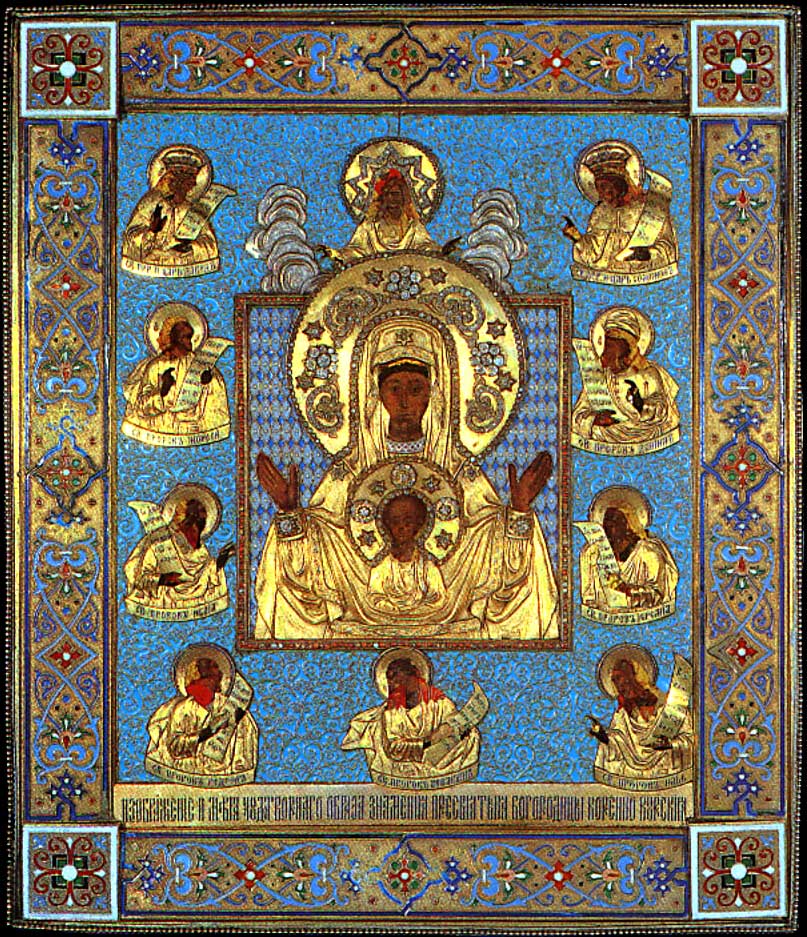
The Kursk-Root Icon Visit to Canada: Summary
07:16 AM
The Kursk Root Icon visited the Canadian Diocese from May 10 to June 23, 2013.
The Kursk Root Icon visited 27 parishes within the Canadian Diocese (this includes 1 Moscow Patriarchate parish, 2 OCA parishes, 1 Serbian monastery, 2 Serbian parishes, 1 Romanian parish).
The Kursk Root Icon was present for 54 church services and visited 349 homes / apartments within the Canadian Diocese. This is a total of 403 services to the Mother of God (Liturgy, Vigil, Moleben / Akathist). -