News
-
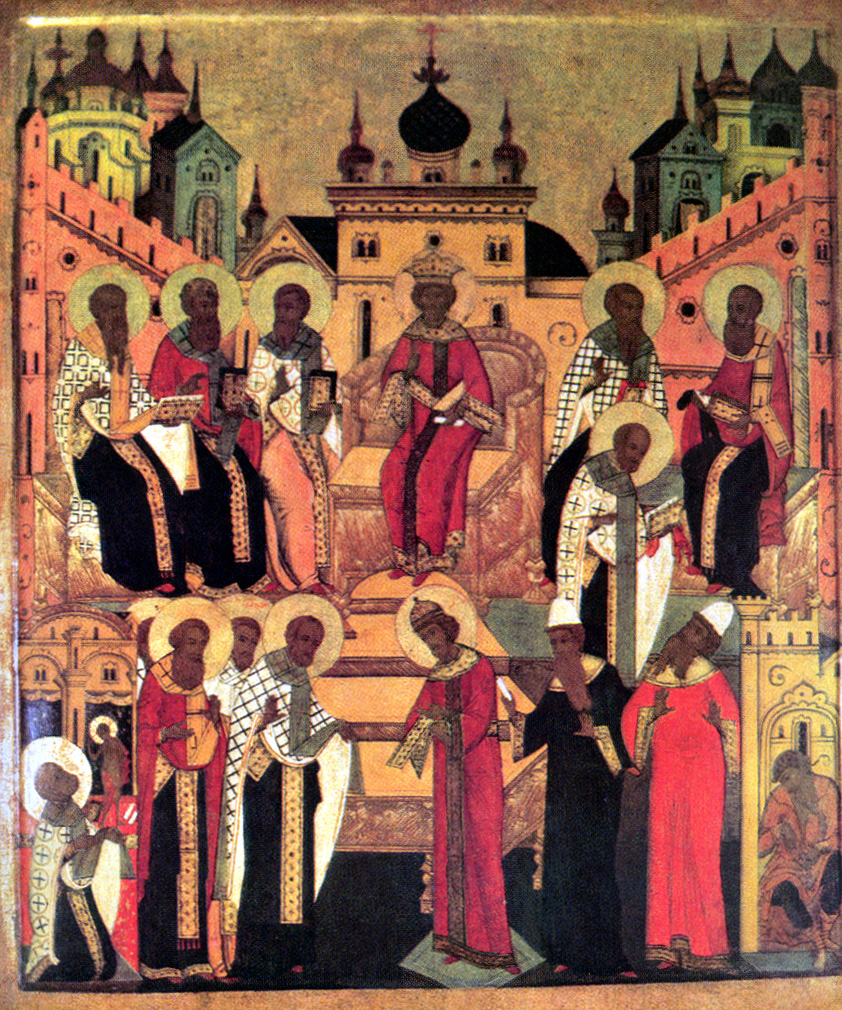
Sunday of the Holy Fathers of the first Ecumenical Council
12:50 AM
“…That they be one, even as We are…”
Dear brothers and sisters!
How much meaning is in these words of the Lord! Praying for His disciples, for His Church, God the Son asks God the Father that we, Orthodox Christians, members of the Body of Christ, be one even as the Holy Trinity is one. Let us note that the Lord does not say ones, but specifically one, that is one whole and not many that are whole.
Oneness is a quality of the Most Holy Trinity, our God. Oneness with God and with the Church is a quality of every Saint. Oneness is a quality that is seen less and less frequently in us and our contemporaries.
The enemy of the race of men, the enemy of the Church of Christ, has fought against the unity of the faithful since the beginning of time. Yet in all the history of mankind he did not reach such progress as in our days. Never before, as it is now, have nations, and even families been stripped of their unity.
Armed with pluralism, individualism, and pretended freedom of self-expression, we have severed our spiritual oneness with the Holy Church, and thus, with God. While masses of people unite for the achievement of political or economical goals, the spiritual oneness and unity is subjected to criticism and mockery everywhere.
From the billboards to the TV screens, from all sides we are called to indulge our uniqueness one more time, to proceed according to our own understanding one more time, to attain our own personal goal with no regard for the established customs of the surrounding society one more time. Simultaneously, any inclination to follow the advice of the old days, in the best of cases, is seen as old-fashioned, and in the worst, as the weakness of character or even retardation.
All of this makes a person appear more and more like a mad animal which by its own intent separates from the flock, and being alone, perishes in the paws of a predator.
Yes, man is not a herd animal; man is created in the image and likeness of God. The oneness and unity of the Church is not at all a mindless crowd. As such, it would not hold up even at the first attack of the enemy. The personal free will of its members is not crushed in the oneness and unity of the Church. The oneness and unity of the Church are the life in Christ, the union with God.
Therefore, brothers and sisters, how shall we attempt to live in Christ, if we have torn within ourselves the spiritual unity with His Church: with each other?
May the words of the Lord be fulfilled in all of us! May we all be one, for our God – the Most Holy Trinity – is One. Amen!
Priest Viatcheslav Davidenko
-
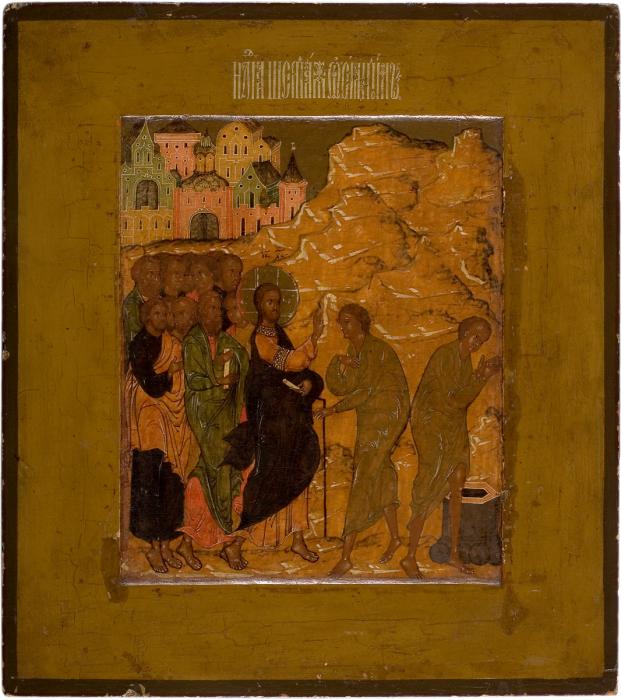
The Sunday of the Blind Man
12:14 AM
Christ is Risen!!!
This week from the Gospel reading we hear how the Lord healed a man blind from his birth. We also hear how the Pharisees, out of envy, tried to convince him, who received healing, that the Lord, Who healed him, was not the Christ, not even a righteous man, but a sinner.
Yet from the words of the used-to-be blind, we see that he received not only the sight of the bodily eyes, but of spiritual ones as well. Being asked, whom he thinks his Healer to be, he boldly answers: He is a Prophet! To the statements of the Pharisees that He can be neither a prophet nor a righteous man because He healed him on a Sabbath day, as if He were breaking the law, the one who received his sight boldly replies that no one, since the creation of the world, ever saw such a miracle, which only a righteous man could work, for God does not hear sinners, but rather those, who honor Him.
Thus, he, who received the gift of sight from the Lord, comes to know Him by His works, and boldly confesses Him before the people. In this there is a most important lesson for us, for so often we deceive ourselves in obtaining knowledge. How often do we form judgments of others based solely on their image or place in society? How often do we hope to beguile others by our outward appearance and words?
But, alas, from the Gospel narrative one can clearly see that we are known truly by our deeds. If at times it seems to us that the Lord does not hear, does not receive our prayers, is it not for the fact that our sins do allow them – our prayers – to rise to Him?
Let us keep in our hearts the words of the one who once was blind: “…God hears those who honor Him, and does their will.” Let us offer the Lord sincere repentance for our sins. So that in the day of our trial the Lord may hear us also. Amen!
Priest Viatcheslav Davidenko
-
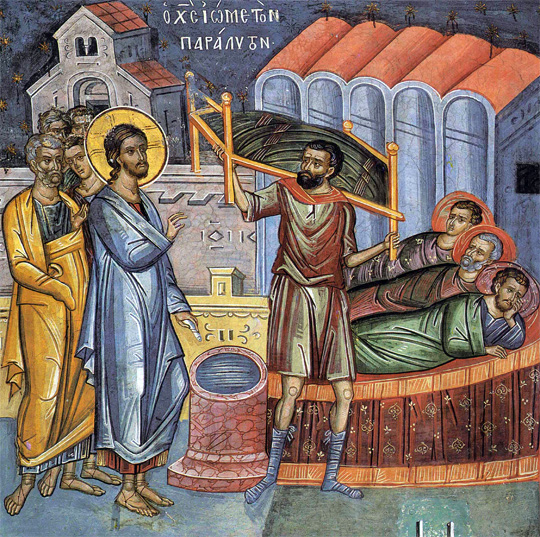
The Sunday of the Paralytic
12:27 AM
Christ is Risen!!!
This Sunday the Holy Church celebrates the healing of the paralytic by the Lord. Today, the Holy Gospel tells us how the Lord came to the sheep’s pool, the place where a multitude of the sick awaited the descent of the angel and the stirring of waters in order to be healed, being the first to enter the waters at the time of their moving.
Having come to the pool, the Lord sees there a man who lay there for thirty-eight years, being paralyzed and having no man to help him be first to enter the waters. Having asked him whether he desires to be whole, the Lord tells him to stand up, take his bed, go and sin no more.
It is imperative that we pay attention to the fact that the Lord, before healing him, asks the paralytic whether he wants, whether he desires to be healed, to be whole. From this is clearly seen that He will neither heal, nor save anyone against his will or – if you will permit – without his participation. All of the holy fathers teach us that the Lord, alone, without us, will not save us. They teach us that even if the great saints, even the most pure Mother of God herself, will pray for us, and yet we, in repentance, will not ask the Lord to save us, He will not. That is why we ourselves must learn, and teach our children, always to seek the kingdom of God, with our whole soul to thirst for righteousness and salvation.
The reply of the paralytic – Lord, I have no man to help me enter the waters and be healed – helps us fathom the meaning of the incarnation of God the Word much more profoundly. The Son of God, the pre-eternal God, becomes a Man and comes to the paralytic, He Himself becomes his Helper. How great is the love of the Lord toward mankind! How great is His humility! Unlike His angel, the Lord does not stir the waters, but revealing His divinity, heals the unfortunate man by His word.
Every one of us is in need of healing from the terrible paralysis: the paralysis of the soul. But alas, by far, not everyone desires such healing, and many altogether refuse to admit that they are sick in soul. At the same time, which one of us always loves to pray? Which one of us always prays with attention? Which one of us always loves his enemies and his neighbors as himself? Which one of us always loves the truth and always keeps the Lord’s commandments? …The answer is apparent: all of us are sick, all of us need healing!
Let us, therefore, brothers and sisters, desire true healing and salvation! Let us cry out to the Lord from the depths of our souls! May the Lord, Who for our sake became incarnate, suffered, and rose from the dead, come to us as He did to the paralytic, and by His word, save us. Amen!
Priest Viatcheslav Davidenko
-
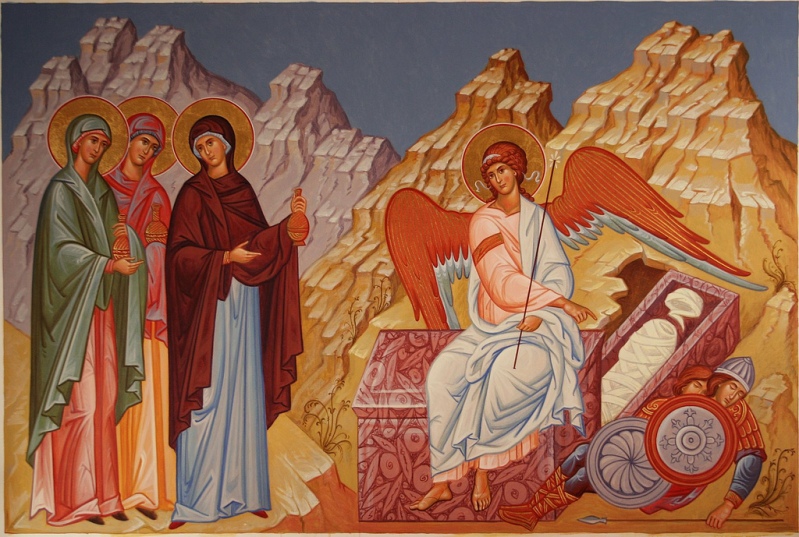
Sunday of the Myrrh-bearing Women
12:17 AM
Christ is Risen!!!
Today, on the third Sunday after Pascha, we commemorate the holy Joseph of Arimathea, Nicodimus – the secret disciple of the Lord – and the myrrh-bearing women: Mary Magdalene, Mary the mother of Cleopas, Salome, Joanna, Martha and Mary – the sisters of Lazarus – and Suzanna, along with others who came with them to the tomb of the Lord. The myrrh-bearing women are specifically remembered on this Sunday because they were the first to see the risen Lord, and Joseph and Nicodemus because they were the ones who buried Him.
The great mercy of God reveals itself in the narration of today’s gospel: the frail women, bravely carrying the sweet spices to the Lord’s tomb, become the first witnesses of His resurrection from the dead. The frail women, desiring faithfully to serve the Lord, Who has fallen asleep, are the first to see the empty tomb. Faithful to the Lord even after His death, they are the first to learn that He is alive.
How harmonious is this narrative with the words of the Lord: “They that are faithful to the end, shall be saved!” How often, in our times, the faithful behold and come to know the great mercy of God! Thus, some, at the time of attentive prayer, unexpectedly behold the grace of the Holy Spirit, descending upon the holy gifts during the Divine Liturgy. Others see different mysteries of God, not asking Him for visions, but only having a desire to serve Him faithfully.
Let us remember the words of the Lord to Thomas, words which we heard last Sunday: “Blessed are they, who have not seen, and yet believed,” and let us not seek visions, lest we fall into beguilement and the deception of the devil. Let us ask help of the Lord, that we may keep the faith to the end, and together with the myrrh-bearing women, may obtain salvation. Amen.
Priest Viatcheslav Davidenko
-
-
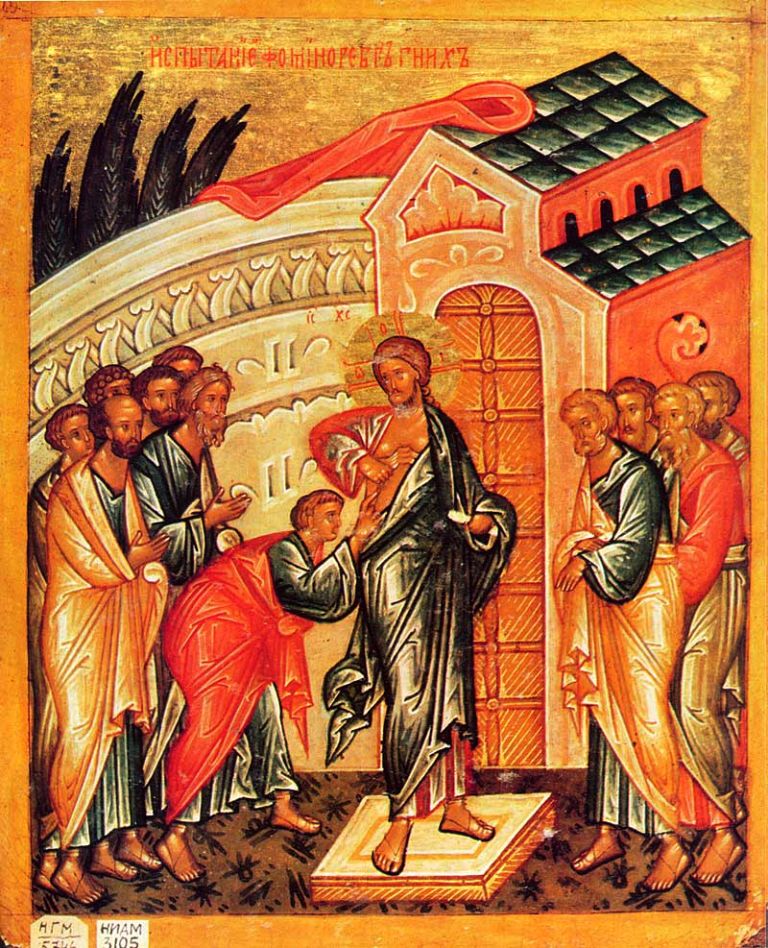
St. Thomas’ Sunday
11:53 PM
Christ is Risen!!!
The first Sunday after Pascha has arrived, and the Church celebrates its – Pascha’s – first commemoration this year. The eighth day of Pascha has arrived, and the Church already celebrates it – Pascha – again. Unlike the other feasts, which are celebrated only once a year, Pascha is repeated both yearly and weekly. That is exactly why in many Orthodox countries the first day of the week is inseparably connected to Pascha: in Russia it is called resurrection day, in Greece, the day of the Lord.
How great should the meaning of the resurrection of the Lord be for us if the Holy Church celebrates it every week? Obviously, we often forget the meaning of this great Feast since we pass through year after year, from Pascha to Pascha, without stopping in order to partake of the grace of the resurrection.
It is interesting to note that all the Sundays in the year make up approximately one seventh of all its days. Thus, at least partially, one seventh of the year is dedicated to the resurrection of the Lord, and if we consciously open our hearts and souls to God only on the feast of Pascha, then we receive only one fiftieth part of the gift of the Lord.
No one in his right mind will say: “Having eaten on Pascha, I will not eat until the next feast.” Each one of us eats daily for the sustenance of bodily strength. Why do we then starve our souls with spiritual hunger?
In our days, when this world mortifies our souls by the forgetfulness of God, by driving out the memory of Him by the multitude of affairs and concerns, may every Day of the Lord – Sunday, the resurrection day – be the day of our spiritual arising with Him. St. John Chrysostom says: “Christ is risen, and there are none dead in the graves…” Let not our hearts remain as sealed tombs on the days of the commemoration of the resurrection of Christ! Amen.
Priest Viatcheslav Davidenko
-
-
-
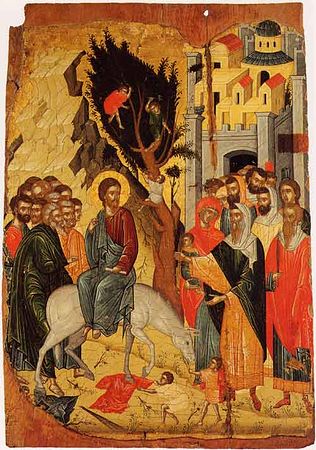
Today the grace of the Holy Spirit has brought us together…
01:00 AM
These words of the stichiron from the service of the feast of the Entry of the Lord into Jerusalem are very important to us. At a quick glance, they contain simply a narrative meaning, but after a prayerful consideration, one can see in them a profound spiritual meaning.
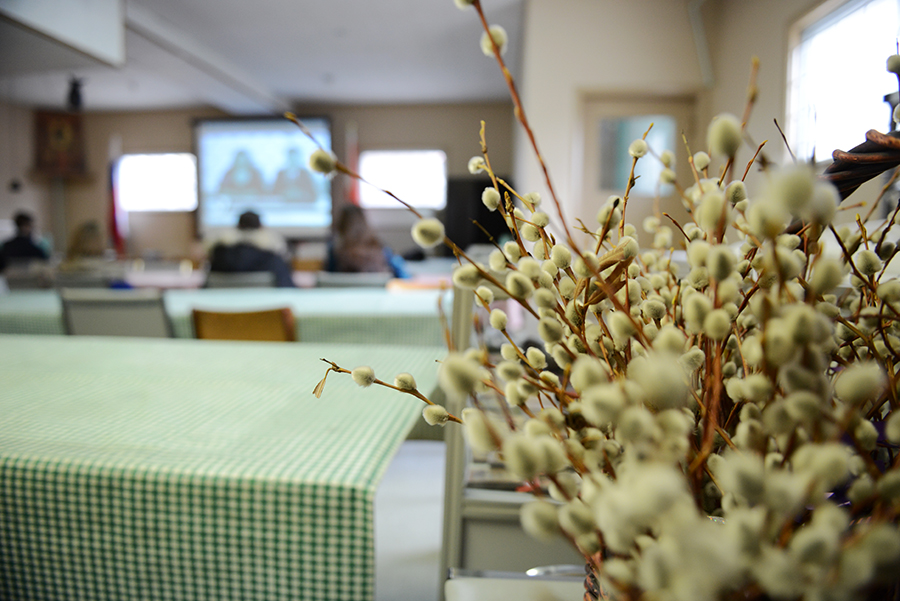
In honor of the feast, we bless pussy willows and palms and, at the end of the service, take them with us for the blessing and sanctification of our homes. But can we apply the words of the stichiron to ourselves based solely on that?
When the Lord entered Jerusalem, He was met by a multitude of people. Many cried: “Blessed is He Who cometh in the name of the Lord! Hosanna in the highest!” But, alas, after a few days the same people shouted: “Take Him, crucify Him!” That makes it obvious that it was not the grace of the Holy Spirit that gathered many that day. More likely, they were gathered by their personal interests, political or economical, interests, which were not satisfied with the coming of the Lord.
Wherefore, we too must ask ourselves: “what is motivating us, bringing us to church?” Is it our love of honor, or desire to be known as – not at all to be – pious? Or is it a hope of satisfaction of selfish desires, when the Church is only a firing range for the achieving of selfish goals, be they financial, political, or psychological?
God grant that for every one of us the reason will be the same: the salvation of the soul. For if we came to the Church for salvation, then truly “…the grace of the Holy Spirit has brought us together!”
Priest Viatcheslav Davidenko
-

Behold the handmaid of the Lord…
09:55 AM
“…be it unto me according to thy word…”
These words of the Most Holy Theotokos should be precious and close to the heart of every orthodox Christian. The Most Holy Theotokos said them on the day of the Annunciation, when Holy Archangel Gabriel addressed Her with the news of the incarnation of the Son of God in Her womb. The meaning of these words is simple enough, however, it is impossible to overstate their significance.
In essence, She, who was about to become the Mother of God, expressed her supreme humility and consent to her extremely difficult vocation by these words. Perhaps, some would be surprised, but Her consent to participate in the economy of our salvation was essential. News from the Archangel about the incarnation of the Son of God within Her womb should have caused many questions and possibly even doubts on Her part, yet She, showing self-control worthy of imitation, asks only one thing: how can She, not knowing Her husband, conceive and bear a Son? Learning, in response, about the decent of the Holy Spirit upon Her and about Her being overshadowed by the power of the Most High, She humbly bows before the will of God and gives Her consent.
This consent is necessary because God never violates the freedom He gave men. God doesn’t save anyone against his will. Today, the Church celebrates the coming of God the Word into the world and glorifies the Mother of God, Who became a temple not made with hands by submitting Her will to the will of the One Who sent the Archangel to visit Her.
Thus, the Most Holy Theotokos becomes the very first Christian because She is the first to know about the coming of the Son of God into the world and because She received Him not only into Her heart, but also into Her womb. She is the first to believe in Him and is His first servant in His earthly life.
Let the great humility of the Mother of God that exalted Her to such heights be an example for all of us. How often do we complain that God doesn’t help us, or doesn’t answer our prayers, yet we do not think whether our plans and desires align with the Divine providence for our salvation? How often are we dismayed and are faint of spirit when the Lord doesn’t come to our aid in obvious need, yet we do not realize that of our own will we do not allow Him to help us? Our stiff-necked wilfulness, our pride, our attachment to sin, our remembrance of wrongs, our greed, and all our other passions, all of it doesn’t allow us to follow the example of the Theotokos and to say: “Here I am, O Lord, I am Thy servant, be it done unto me according to Thy word!”
The Lord is always near and by all means desires our salvation. His Most Pure Mother also always prays for us. Let us also pray that God would give us the strength at all times and in all things to seek first the Kingdom of God and His righteousness. Let us follow the example of the Most Holy Theotokos and at all times and in all things let us seek God’s holy will. We know that then the Lord will always be with us even as He descended into the womb of His Most Pure Mother. Amen.
Priest Viatcheslav Davidenko